NOTE: The information below is provided for your convenience only and we cannot guarantee its accuracy. If necessary, please verify with us before purchasing.
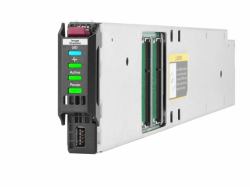
HPE Synergy Image StreamerSynergy Image Streamer
Can HPE Synergy manage physical servers like virtual machines? HPE Synergy Image Streamer implements rapid image/application changes to multiple compute nodes in an automated manner. It integrates software-defined intelligence from HPE Composer to deploy and update physical compute nodes with operating environment images for bare-metal booting directly into a running OS and for VM hosting with quick image changeovers. Rapid delivery of applications and services results from this 'infrastructure-as-code' capability. Enhanced profiles provide true stateless images, which integrate the server hardware configuration with operating environment images. Enhanced profiles are stored in redundant image repositories and are automatically integrated for simplicity of use. The Unified API allows access for partners, developers, and users to unlock value creation with HPE Image Streamer. Integration, automation, customization of operations and applications is enabled with the wider ecosystem.
FeaturesRun Anything - Optimize All Apps and Service Levels- HPE Synergy Image Streamer can quickly provision an operating environment across a large number infrastructure blocks. This helps IT in deployments and updates for environments such as web servers.
- The Unified API enables programmatic control of HPE Image Streamer by developers and users for integration, automation, and customization. You can script these modern RESTful interfaces using Python or Powershell, or access the State Change Message Bus and RabbitMQ queue, to optimize control.
- Your image content might contain an OS or even a complete application stack. Your images can be quickly applied to multiple compute nodes to optimize your IT service deliveries.
Move Faster - Accelerate App and Service Delivery- HPE Synergy Image Streamer enables true stateless operation by integrating your Server profiles with your golden images (OE and I/O driver) and your personalities (OS and application) for rapid implementation onto available hardware.
- Stateless operation can also be used to plan environments early for fast implementation onto hardware later.
- Deployments are executed from your library of images, using your tested operating environments and personalities for quality and consistency at extreme speed.
- Updates can capture your Golden Image and re-deploy the revised boot image for use by multiple compute nodes.
Work Efficiently - Reduce Operational Effort and Cost- HPE Synergy Image Streamer automatically sets up configurations and integrations with HPE Composer for server profile use. Access to HPE Image Streamer is implemented through the HPE Composer server profile or through the Unified API.
- Tools for customizing your images and environment are provided, along with reference implementations. This enables you to use your specific OS images and versions. For some operations like capturing your Golden Images, you may also choose to use your own tools and edit existing images.
- Bare-metal compute modules can be booted directly into a running OS to reduce operational efforts. If your Golden Image contains an application stack, then the bare-metal compute nodes would boot directly into the application stack. This can accelerate your time-to-service.